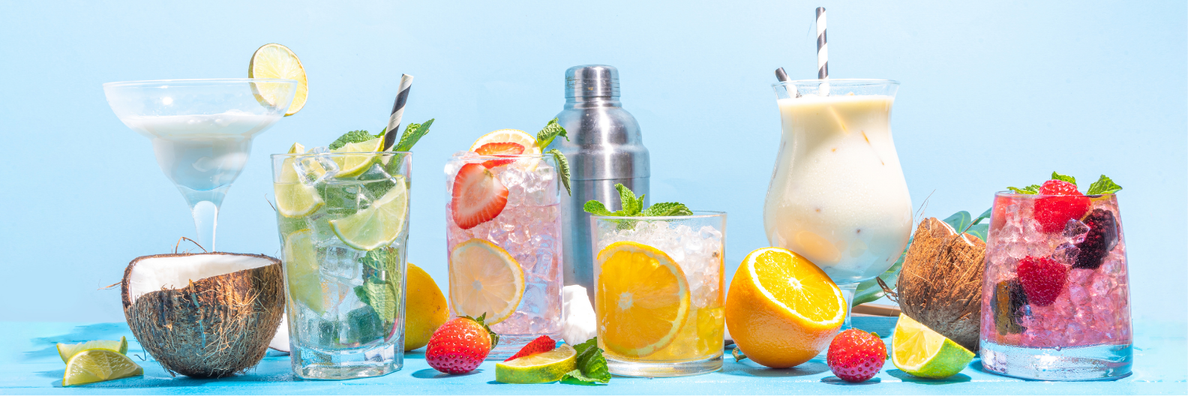

Mocktails, which are essentially non-alcoholic cocktails, have been around for nearly as long as cocktails themselves. The concept of enjoying a flavorful, mixed beverage without alcohol became particularly popular during the Prohibition era (1920–1933) in the United States, when the sale and consumption of alcohol were banned. During this time, creative bartenders began crafting drinks that mimicked the taste and presentation of cocktails but without the alcohol.
The term “mocktail” gained popularity later, in the 1980s, as the wellness movement grew and more people began seeking alcohol-free alternatives. Mocktails have since evolved, becoming increasingly sophisticated, and are now a staple on many bar menus.
What is a mocktail?
A mocktail is a non-alcoholic drink that is created to be similar to a cocktail. Everything from the ingredients (except the alcohol) to the appearance makes a mocktail look almost identical to the cocktail inspired by it. In this sense, mocktails can be thought of as alcohol-free alcohol drinks.
What Is a Mocktail Made Of?
Mocktails use a wide range of ingredients that cover a spectrum of flavors, with many even mimicking the taste of bourbon, gin, vermouth, bitters, and other staples in the bartender’s kit. Crafting a mocktail isn’t easy—in fact, it can be nearly as complicated as making an excellently balanced alcoholic drink. Common ingredients include juices, sodas, infused waters, and many other non-alcoholic ingredients, mixed in just the right ratios.